
Beyond the diagrams.
Into the decisions.
Architecture patterns, editable diagrams and tools. Start with a pattern, understand its trade-offs, then adapt it to your own context.
Browse patterns.
Reference models you can critique, extend and make your own. Every design comes with the reasoning behind it.
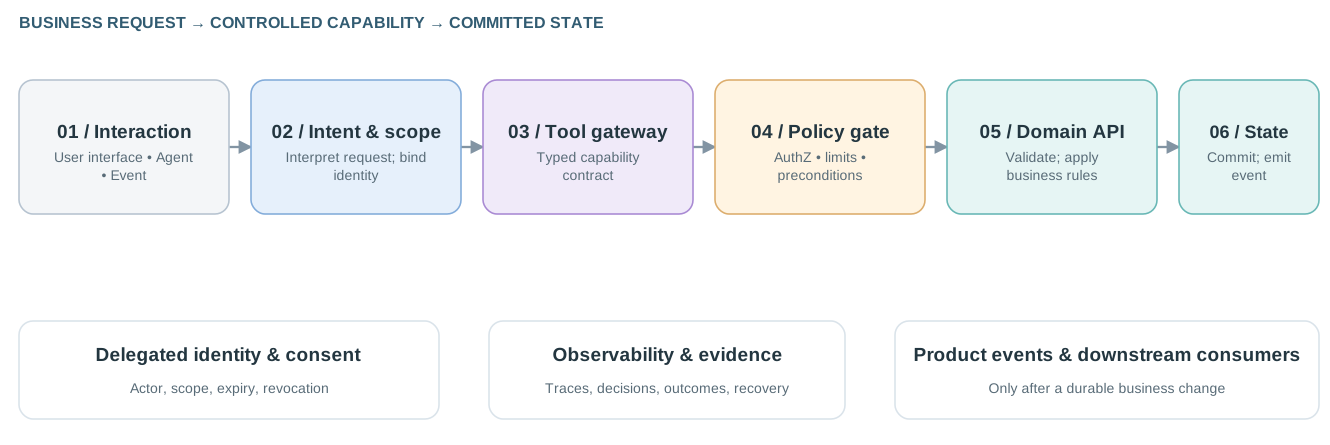
Agent-ready SaaS: capability-centred reference architecture
Separate AI entry points from the business capabilities that actually own policies, transactions and state.
View pattern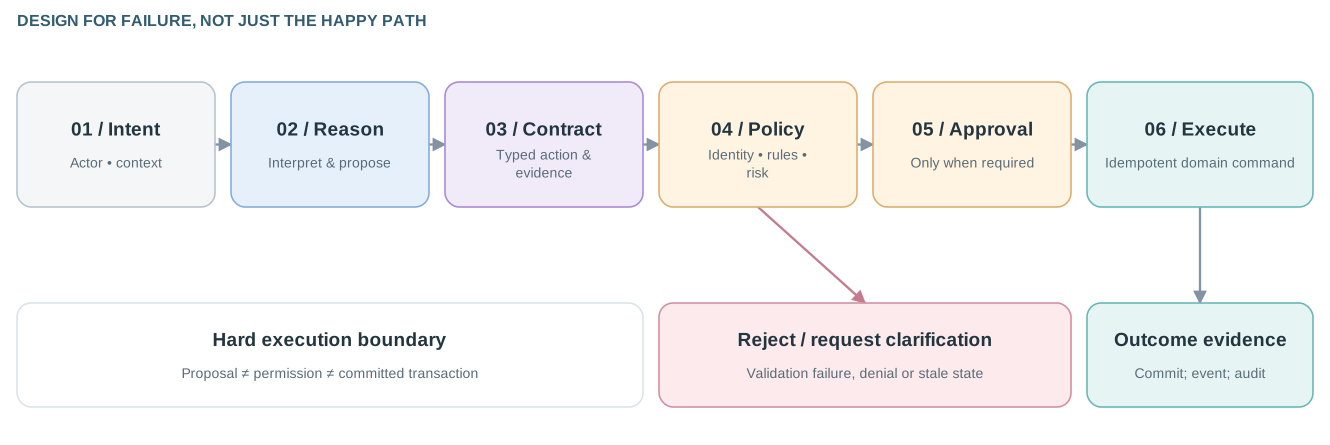
The reasoning–execution boundary
A concrete contract for allowing probabilistic systems to propose actions while deterministic services retain authority to execute them.
View pattern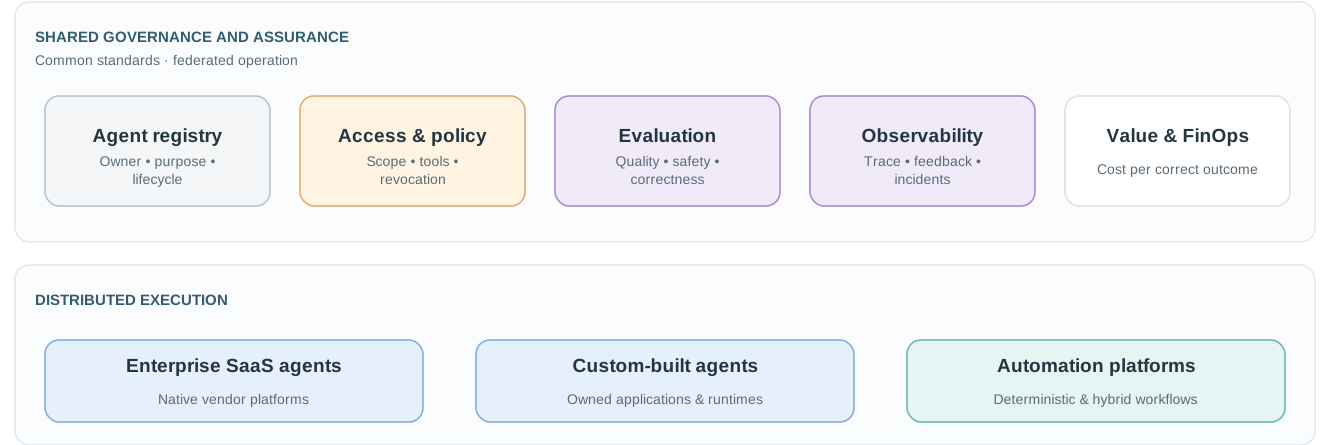
Enterprise AI control plane
A conceptual control plane for governing a federated estate of assistants, agents and automations without forcing all execution through one platform.
View pattern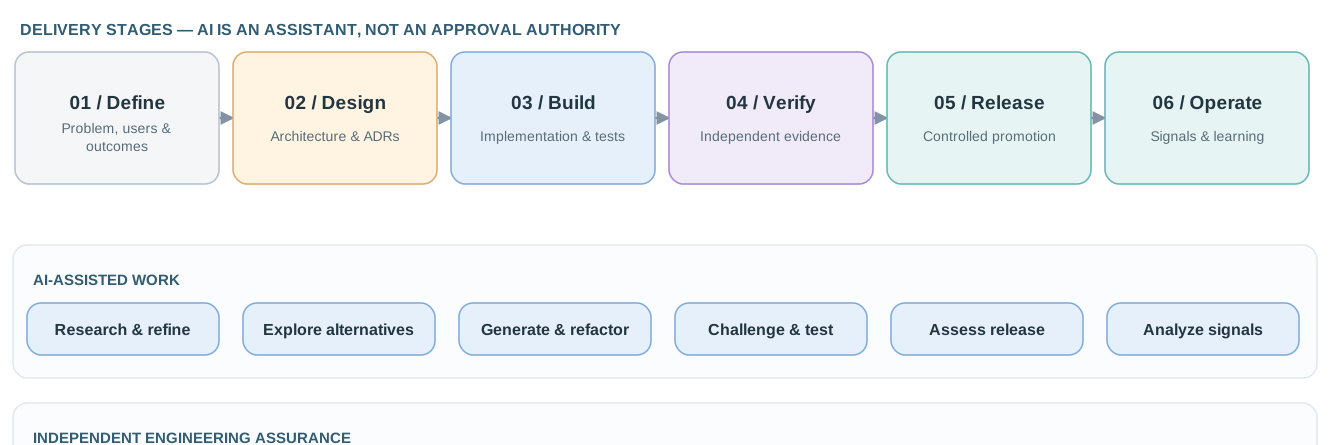
AI-assisted development lifecycle (AI DLC)
Show where AI accelerates software delivery and where independent engineering evidence remains essential.
View pattern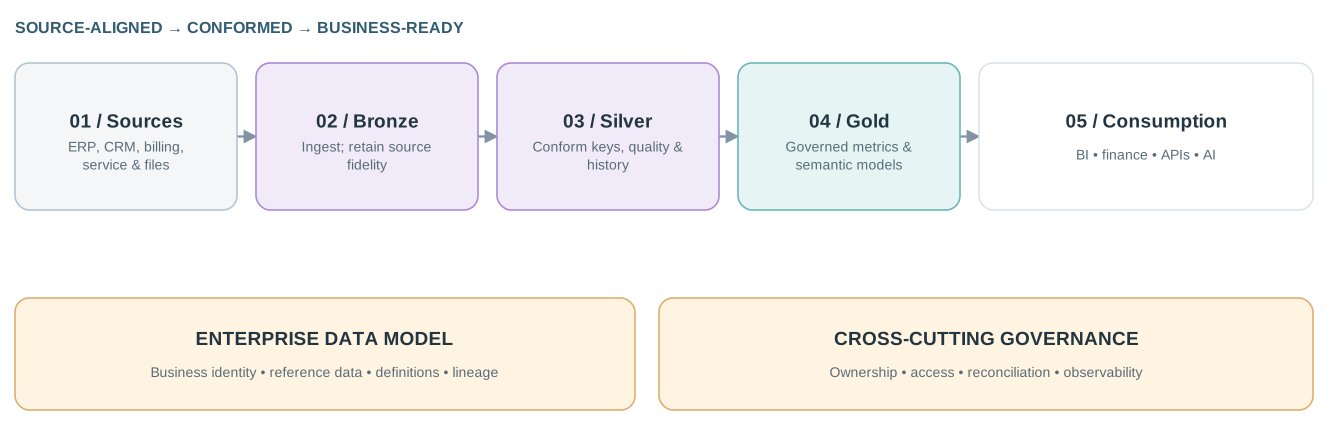
Enterprise data platform: trusted consumption architecture
Connect operational source systems to trusted, governed and consumption-ready information without confusing storage layers with business meaning.
View pattern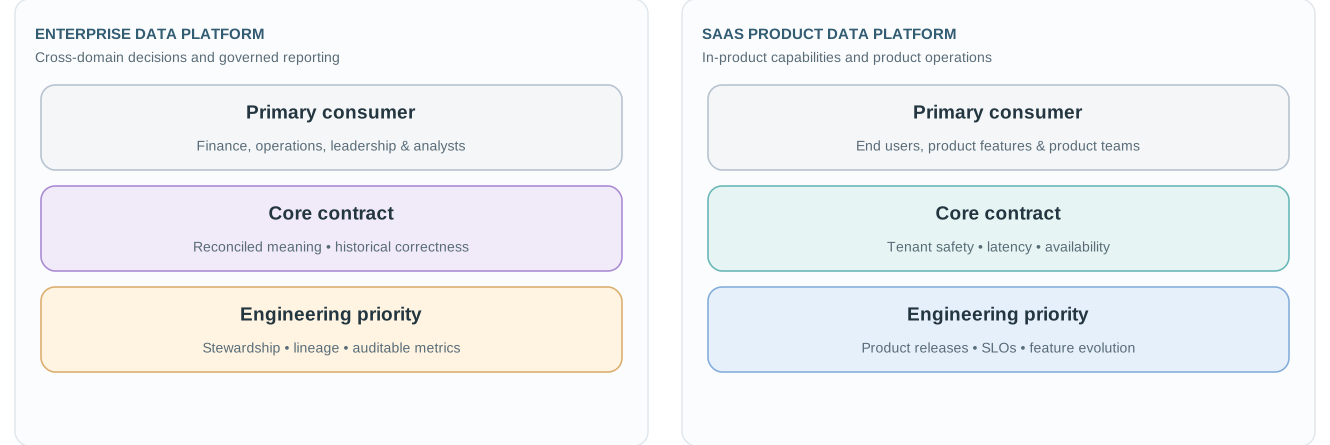
Enterprise data and product data: shared technology, different contracts
Two data-platform operating models can use the same engine while requiring different data contracts, workloads, release expectations and ownership.
View pattern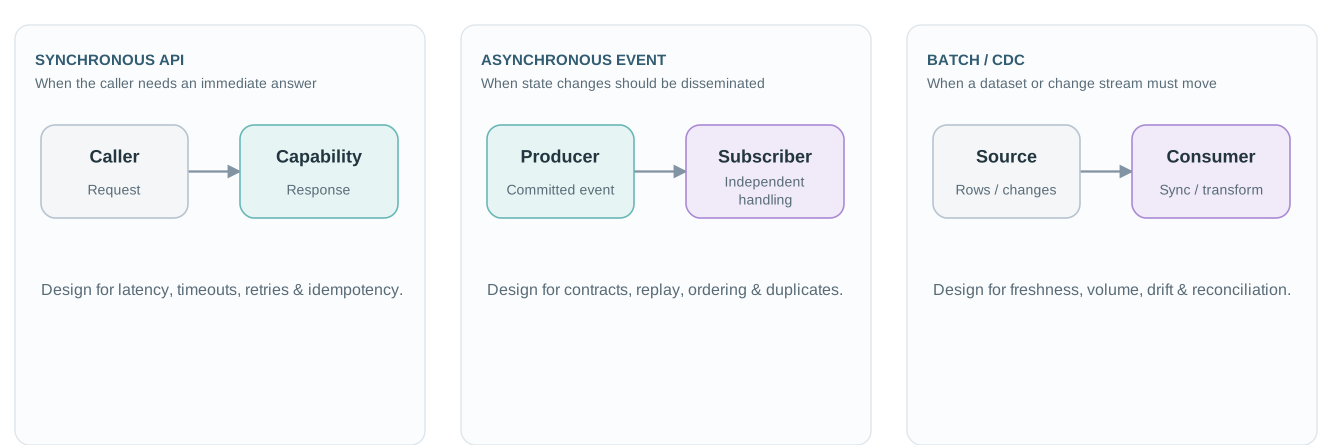
Choosing API, event or batch integration
Pick an integration style based on interaction semantics, consistency, latency and recovery—not because a platform supports a particular technology.
View patternNo patterns match this category.
A consistent way to design.
Architecture canvas & decision tools
One-pager, ADR, review checklist, pattern record and example capability contract.
Explore templates ↗02 / PRINCIPLESTen principles I design by
Opinionated rules of thumb about ownership, state, failure, engineering and AI.
Read the principles ↗03 / REUSEUse it. Adapt it. Challenge it.
Editable formats, attribution, licensing and the limits of a reference architecture.
How to reuse ↗Color with purpose.
Distinct semantic roles, consistent across the editable sources and the published diagrams. Labels always carry the meaning, never color alone.
The diagram is the start.
Not the answer.
Each pattern is deliberately incomplete. Your system, regulatory environment, failure tolerance and business responsibilities determine the final design. Use these as starting points—not as substitutes for architectural judgment.