
THE PROBLEM
Why this pattern exists
Uncoordinated agent proliferation creates fragmented permissions, cost visibility, evaluation standards and lifecycle management.
DESIGN GUIDANCE
Principles to preserve
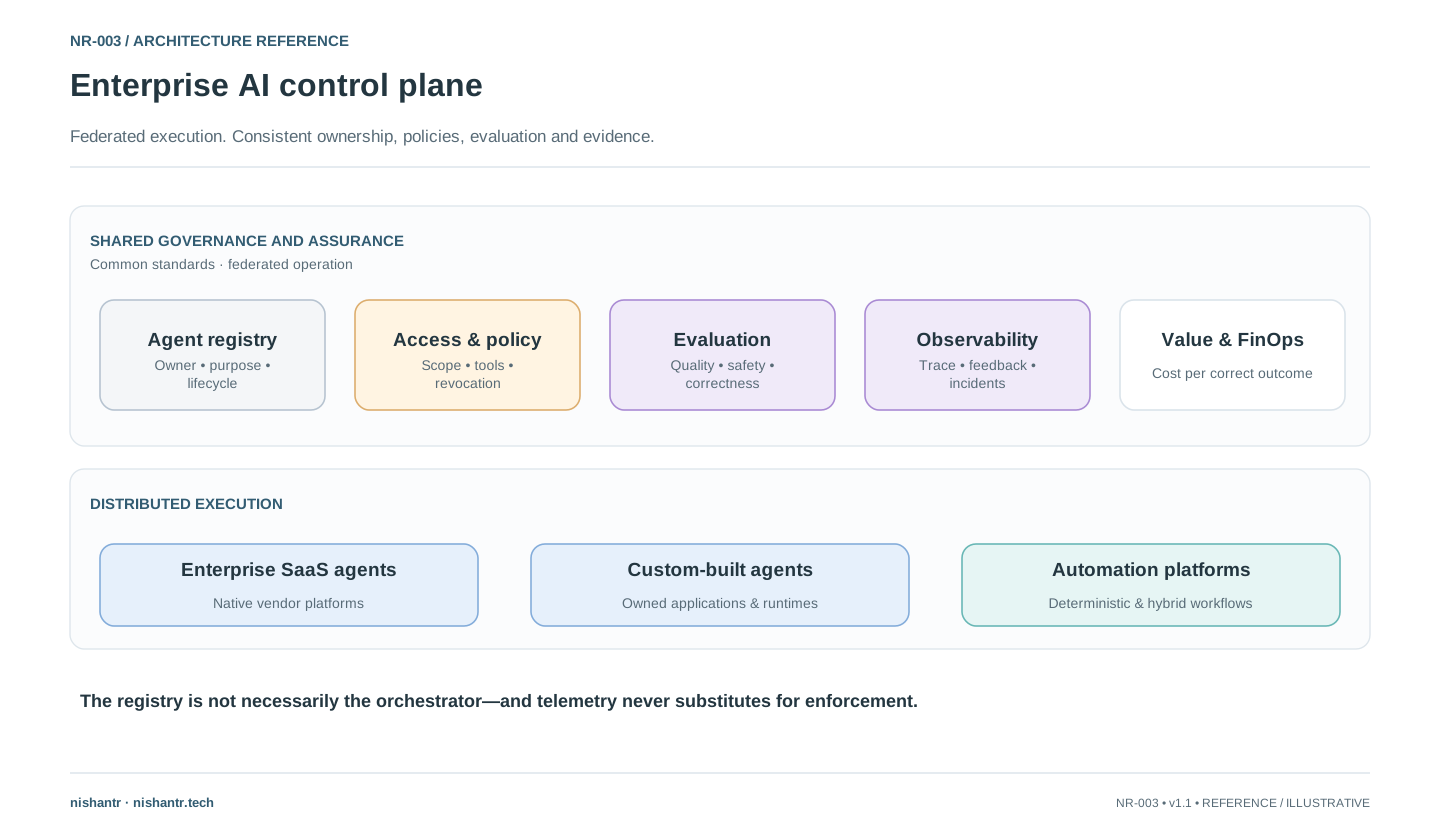
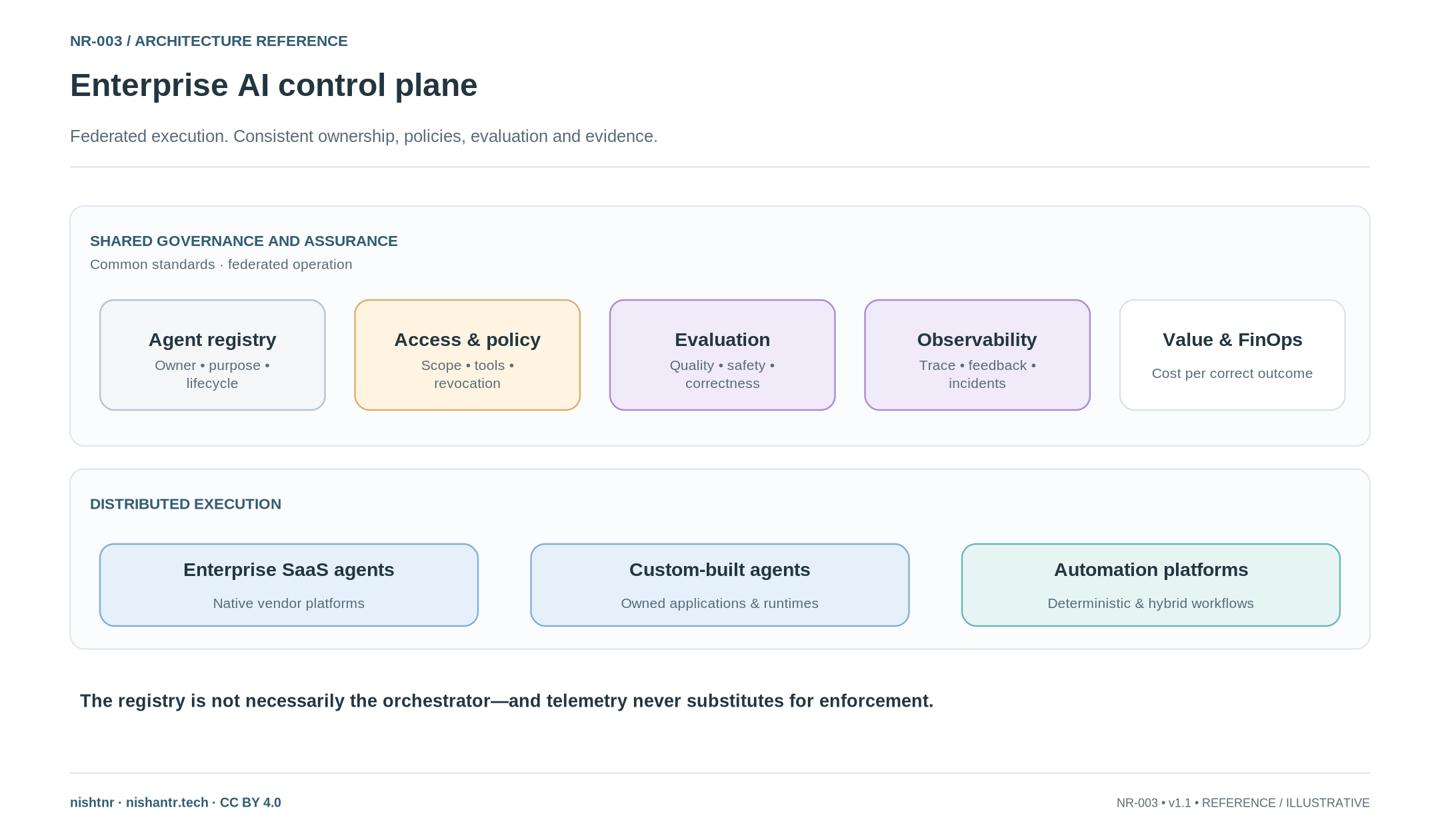
- Execution remains federated; policy and evidence are consistently defined.
- Every production agent has a named owner, purpose, scope and lifecycle state.
- Identity and tool permissions must be enforced at execution time.
- Evaluation and cost are observed per task and business outcome.
- Registry does not imply central orchestration of all workloads.
THE REAL DESIGN WORK
Trade-offs, not just boxes
- Central guardrails add operational overhead but enable consistent oversight.
- A shared telemetry schema may reduce platform-specific detail; retain native traces when needed.
- Cross-vendor policy portability is partial and requires adapters.
REVIEW QUESTIONS
Before you implement
- Where is policy enforced versus merely declared?
- What constitutes a successful, correct business outcome?
- Can an agent be suspended or rolled back without breaking core processes?
- How is third-party tool access revoked?