
THE PROBLEM
Why this pattern exists
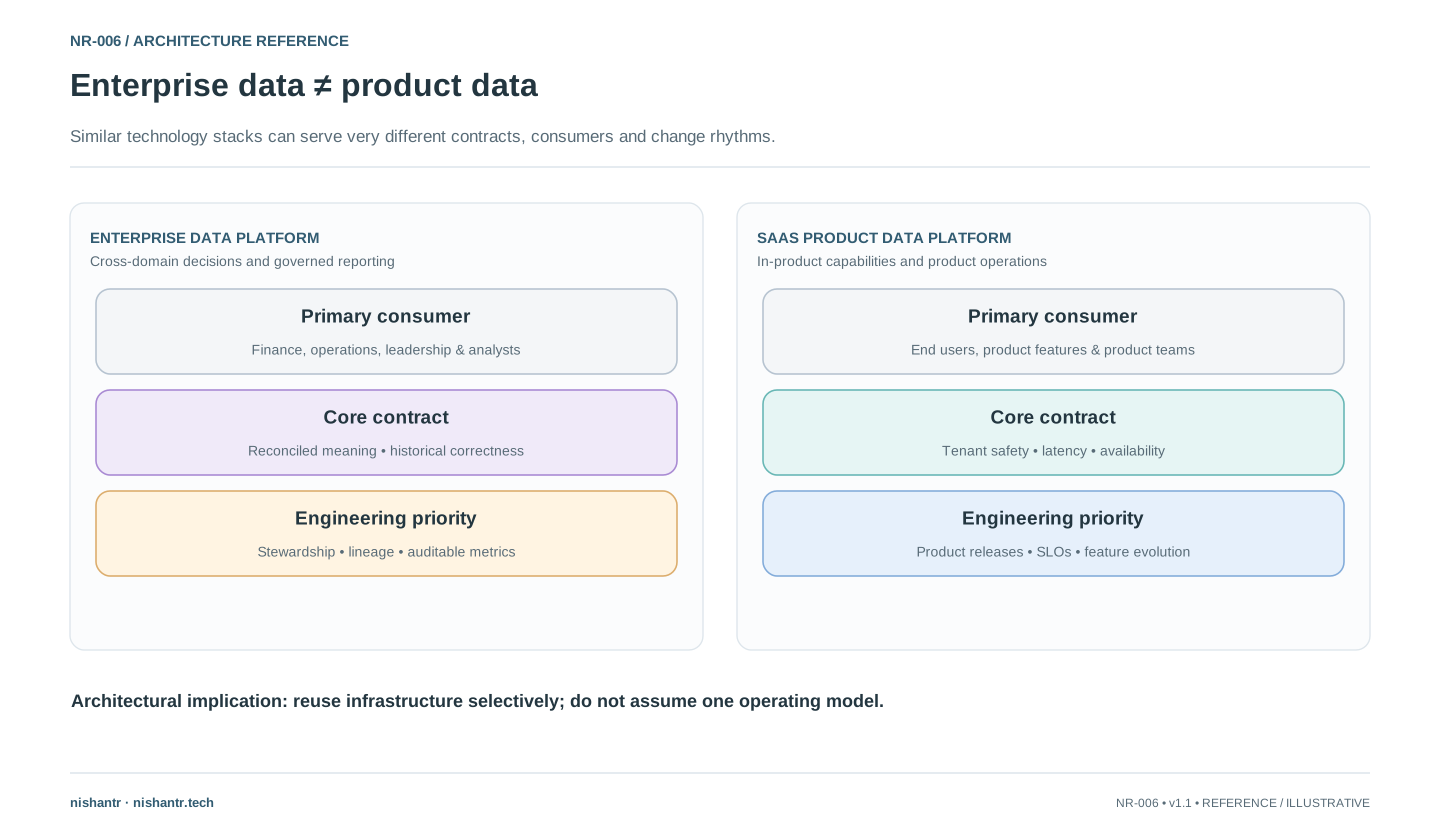
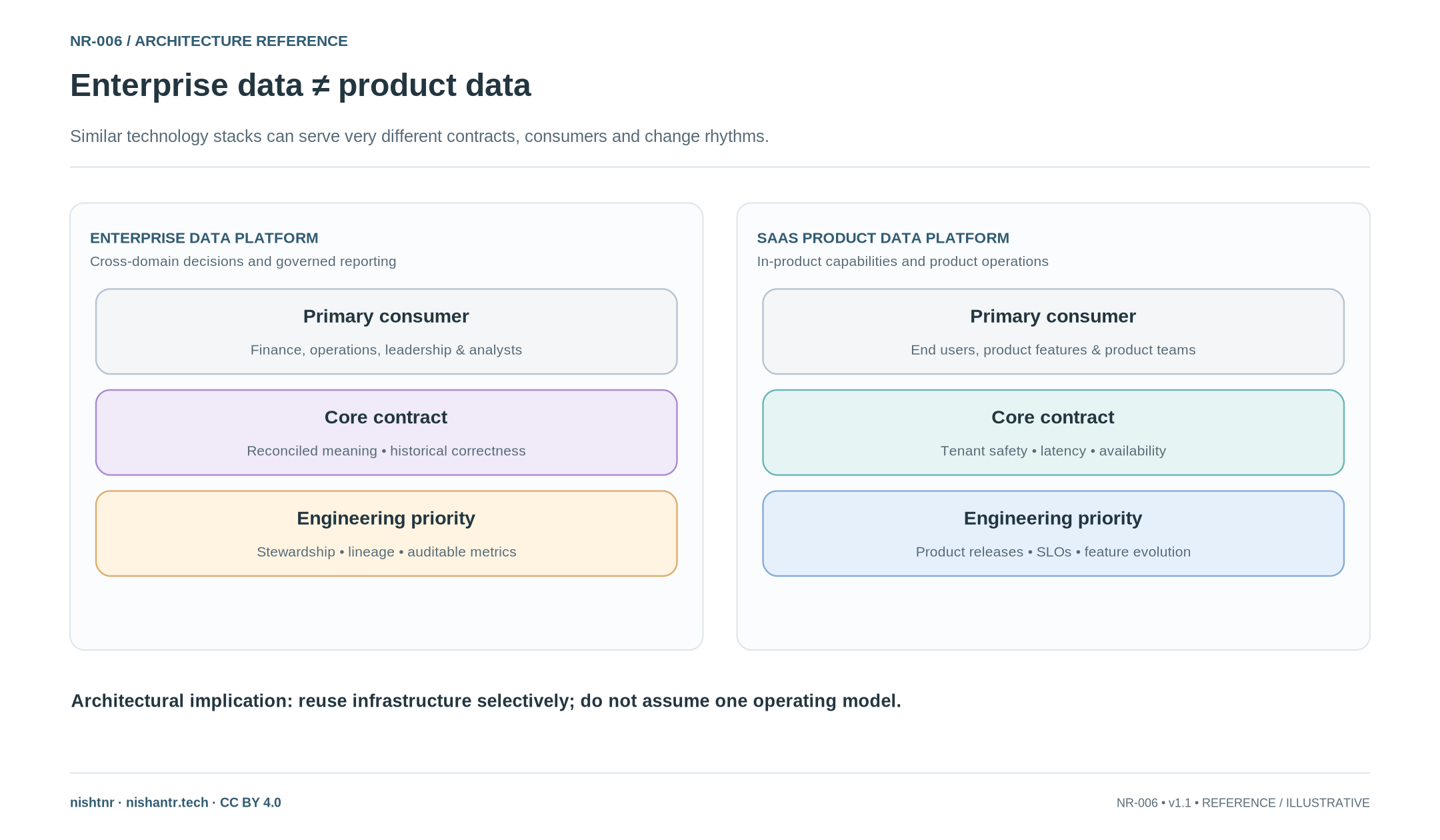
Copying a SaaS product telemetry architecture into enterprise finance analytics—or vice versa—creates mismatched reliability, governance and change models.
DESIGN GUIDANCE
Principles to preserve
- Classify every data product by consumer and quality-of-service contract.
- Enterprise data prioritizes reconciliation, enterprise definitions and auditability.
- Product data may require tenant isolation, low latency and release alignment.
- Share tooling deliberately; separate contracts, ownership and SLOs where necessary.
- Physical consolidation is a decision, not an architectural goal.
THE REAL DESIGN WORK
Trade-offs, not just boxes
- Shared infrastructure lowers some platform cost but increases noisy-neighbor and release coupling risks.
- Separate environments simplify isolation but duplicate capabilities.
- Faster product iteration can conflict with stable finance reporting definitions.
REVIEW QUESTIONS
Before you implement
- Is consumption analytical, operational, embedded or regulatory?
- What is the tenant isolation model?
- How do product deployments change data contracts?
- Are definitions centrally agreed or product-contextual?